Rug Pulls Hall of Shame: Famous Crypto Exit Scams
A Netflix-famous squid game token, a celebrity-backed coin, an anonymous chef who vanished with $25 million. The most notorious rug pulls — and the red flags that were screaming the whole time.
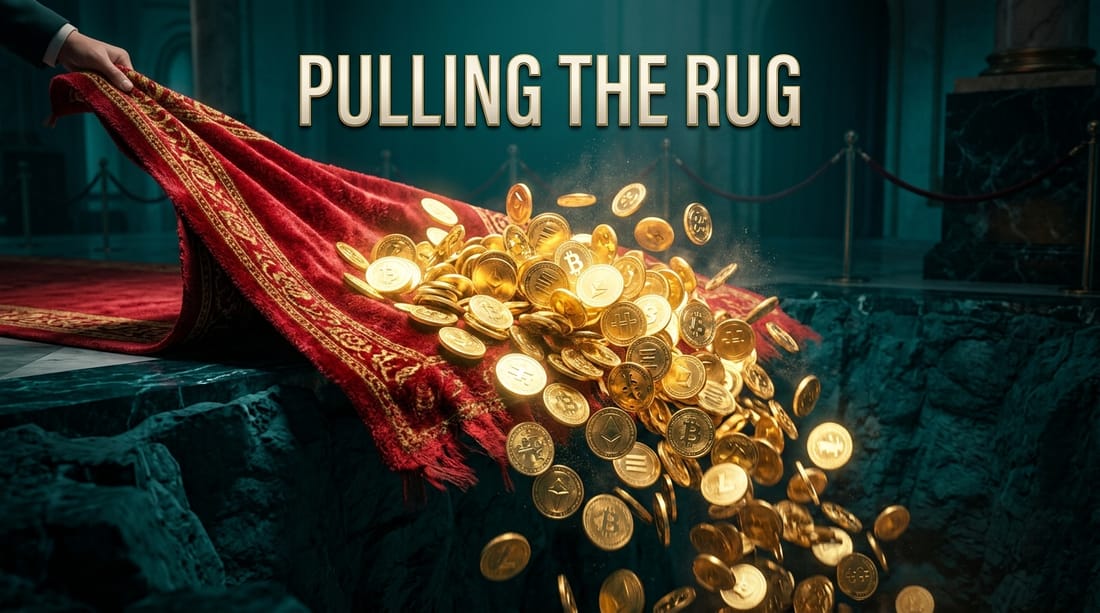
A "rug pull" is the most fitting phrase crypto ever invented. One moment you're standing on solid ground — a promising new token, a buzzing community, a chart going up. The next, someone yanks the rug, the liquidity vanishes, and you're flat on your back holding coins worth nothing, often unable to even sell them.
Unlike a project that simply fails, a rug pull is fraud by design. The team never intended to build anything. The whole operation was a trap. And the maddening part is that, in hindsight, the warning signs were almost always flashing in neon. Let's tour the hall of shame — not for the schadenfreude, but because every entry teaches a red flag worth memorizing.
Squid Game token: the rug everyone could see coming
In late 2021, riding the global obsession with Netflix's Squid Game, a token called SQUID launched and went vertical — climbing thousands of percent in days. There was just one problem, widely reported before the collapse: you couldn't sell it. The contract was a honeypot. Buyers poured in, the price screamed upward on paper, and then the developers cashed out an estimated $3.3 million and vanished. The token went from over $2,800 to essentially zero in minutes.
The lesson is brutal and simple: a number going up means nothing if you can't actually exit. A price you can't sell at is fiction. This is exactly the trap we teach people to detect in how to spot a honeypot token.
AnubisDAO: $60 million gone in 20 hours
In October 2021, a project called AnubisDAO raised around 13,000 ETH — roughly $60 million — in a token sale that lasted less than a day. The founders were anonymous, operating under cartoon dog avatars. Hours after the raise completed, the entire pool of funds was drained to an unknown wallet. No product, no warning, no recourse. Sixty million dollars, gone in under 20 hours, into the void.
The flag here: anonymous founders holding all the money with nothing locked. When you can't identify who's running a project and there's no mechanism stopping them from leaving with the funds, you are trusting strangers in masks. Our guide on vetting a project's team and backers exists precisely because of stories like this.
The celebrity coin graveyard
A whole sub-genre of rug pulls runs on borrowed fame. An influencer or celebrity lends their name to a token, their fans pile in on trust, the insiders sell into that demand, and the price craters. Sometimes it's an outright scam; sometimes it's reckless promotion of a "pump and dump." Either way, the fans are the exit liquidity. Regulators have since fined multiple celebrities for promoting tokens without disclosing they were paid.
If the strongest reason to buy a token is that a famous person mentioned it, you are not the investor \u2014 you are the product. Fame is marketing, not fundamentals.
The patterns behind every rug
Strip away the specifics and almost every rug pull shares the same DNA:
- Anonymous or unverifiable team. No real names, no track record, no accountability.
- Unlocked liquidity. The trading pool can be pulled at any moment. Locked liquidity (in a time-locked contract) is the single most important protection, and its absence is a screaming alarm.
- Concentrated supply. A few wallets hold most of the tokens, ready to dump. You can check this yourself on a block explorer.
- Manufactured urgency. "Get in now or miss out forever." Urgency is the scammer's favorite tool — the same lever that powers pig-butchering cons.
- Hype with no product. Endless memes and price-talk, zero working technology or honest roadmap.
How to never be the punchline
You don't need to be a developer to protect yourself. You need a checklist and the discipline to walk away when something fails it:
- Is liquidity locked, and for how long? If you can't verify it, assume no.
- Can you actually sell? Test with a tiny amount first, or read the contract.
- Who holds the supply? A few whales holding most of it is a trap.
- Who is the team? Anonymous isn't automatically a scam — Bitcoin's creator was anonymous — but anonymous plus control of all the funds is.
- Does urgency make sense? Real opportunities rarely require you to act in the next ten minutes.
Most people who get rugged didn't lack intelligence; they had FOMO and skipped the boring checks. If you stick to reputable exchanges for the bulk of your activity — platforms like vet listings far more strictly than an anonymous token launchpad — you sidestep the vast majority of these traps entirely.
The hall of shame keeps adding members because the formula keeps working on people in a hurry. Slow down, run the checklist, and let someone else be the cautionary tale.
Frequently asked questions
A rug pull is a scam where a crypto project's creators attract investors, then suddenly drain the liquidity or dump their tokens and disappear, leaving holders with worthless coins they often can't even sell.
A failed project tries and doesn't succeed. A rug pull is fraud by design — the team always intended to take the money and run. The giveaways are usually anonymous founders, unlocked liquidity, and aggressive hype with no real product.
Almost never. Blockchains are public, so funds can sometimes be traced, but the scammers are usually anonymous and move money through mixers quickly. Prevention is the only reliable protection.
Anonymous teams, unlocked or unverifiable liquidity, a tiny number of wallets holding most of the supply, promises of guaranteed returns, and a contract you can buy into but not sell out of. Any one of these should stop you cold.
Keep reading




Popular this week
- 01Grid Trading Bots Explained, and When They Blow UpGuide · 4 min
- 02Where AI and Crypto Actually Meet: Compute, Data, and DePINAnalysis · 9 min
- 03Modular vs Monolithic Blockchains: The Design FightExplainer · 6 min
- 04Base and Coinbase's Quiet Bet on Bringing Millions On-ChainAnalysis · 5 min
- 05What Moves Crypto Prices? The Forces Behind the VolatilityAnalysis · 3 min