Tokenomics 101: Supply, Unlocks, and Who Holds the Bag
A coin can have a great story, a great team, and still bleed for years — because of its tokenomics. Here's how to read supply, unlocks, and distribution before they read you.
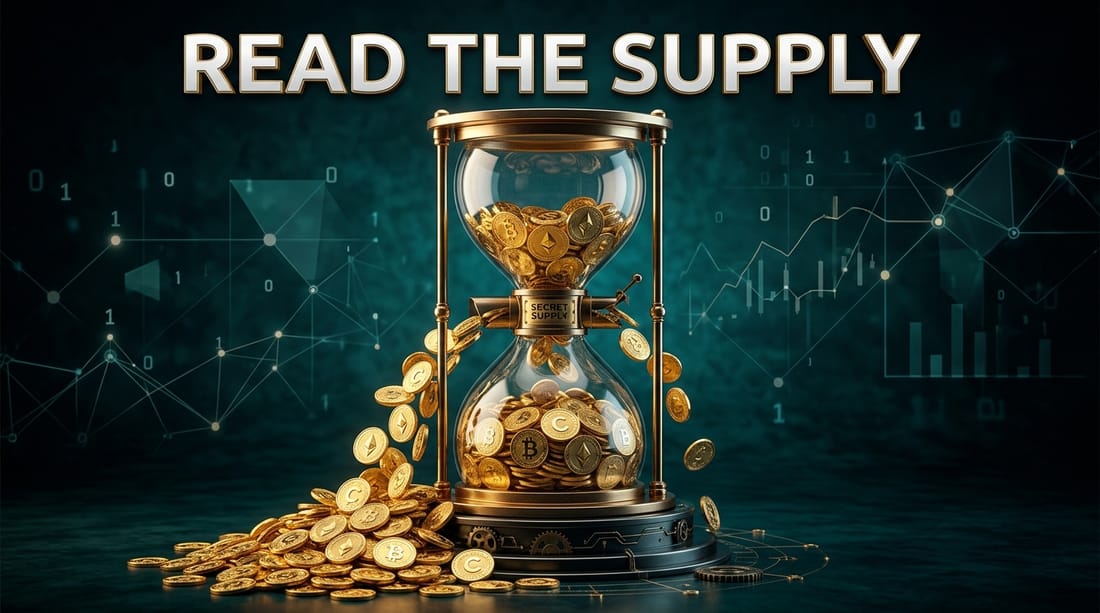
Here's a frustration that catches thoughtful investors: you find a project with real technology, a credible team, and a genuine use case — you buy it — and it bleeds, slowly, for a year, while the broader market climbs. You were right about everything except one invisible thing. You were wrong about its tokenomics.
Tokenomics is the economic design of a coin: how many exist, how new ones appear, who holds them, and when those holders are allowed to sell. It's the supply side of supply-and-demand, and it can quietly overpower even the best story.
Circulating supply vs. the part they hope you don't check
The first trick to see through is the gap between circulating supply (tokens tradable right now) and total or max supply (every token that will ever exist). A project can launch with only a tiny slice circulating, which makes the price per token look healthy and the market cap look modest — while a vast reserve waits in the wings.
That waiting reserve has a name when people stop ignoring it: fully diluted valuation — what the project would be worth if every token were already out. When the fully diluted number dwarfs the current market cap, you're being shown a small, friendly part of a much larger supply that's coming whether you like it or not.
Unlocks: the supply you can see arriving
Most tokens for teams and early investors are locked at launch and released gradually on a vesting schedule. Each scheduled release is an unlock — a fresh batch of tokens that suddenly become sellable.
Think about the incentives. An early investor who got in at a fraction of today's price, whose tokens just unlocked, has every reason to take profit. A big unlock is therefore a wave of new supply hitting the market, often from holders sitting on enormous gains. Even with steady demand, price is supply and demand — and a flood of new supply pushes the other way.
A coin can have rising users, real revenue, and good news \u2014 and still grind down for months because relentless unlocks are dumping new supply onto the market faster than demand can absorb it. Always check the unlock schedule before you buy. It's public, and it's predictable.
Who holds the bag?
Distribution is the third pillar, and it answers a blunt question: if things go well, who gets rich, and if they go badly, who's left holding the bag? Look at how the supply was divided:
- A huge allocation to insiders (team, private investors) means a small group can exert enormous pressure on price when they sell.
- A fairer, wider distribution spreads both the upside and the selling pressure, and aligns more people with the project's long-term health.
- A tiny, hyper-concentrated holder base — visible right on the block explorer — means you're effectively trusting a handful of wallets not to ruin your day.
What good tokenomics looks like
You're not hunting for perfection, just for honesty and alignment:
- A clear, reasonable supply with no enormous hidden reserve about to flood out.
- Sensible unlocks that don't dump huge percentages on the market in short windows, ideally tied to long vesting that keeps insiders invested.
- Fair distribution where insiders don't own a crushing majority.
- A reason for the token to exist beyond fundraising — real utility that creates ongoing demand to meet the ongoing supply.
The lesson is humbling and useful: a coin is not just its technology or its community. It's also a faucet of new supply on a schedule someone else designed. Before you fall in love with the story, read the supply mechanics — because if you don't, the unlock schedule will eventually read you, one quiet sell wall at a time.
Frequently asked questions
The economic design of a token — how many exist, how new ones are created or released, who holds them, and what they're used for. Good tech with bad tokenomics can still be a poor investment.
Circulating supply is what's tradable now; total (or max) supply includes tokens not yet released. A low circulating supply can hide a flood of future tokens waiting to unlock.
A scheduled release of tokens previously locked for the team, investors, or treasury. Large unlocks add new sellable supply and can pressure the price when they hit.
The market value if every token that will ever exist were already circulating. A huge gap between market cap and fully diluted valuation warns of heavy future dilution.
Keep reading




Popular this week
- 01Rug Pulls Hall of Shame: Famous Crypto Exit ScamsAnalysis · 4 min
- 02Grid Trading Bots Explained, and When They Blow UpGuide · 4 min
- 03Where AI and Crypto Actually Meet: Compute, Data, and DePINAnalysis · 9 min
- 04Modular vs Monolithic Blockchains: The Design FightExplainer · 6 min
- 05How to Spot Wash Trading and Fake VolumeGuide · 5 min