Why You Pay Gas Fees — and How to Pay Less
Gas fees pay for space on a shared global computer. How the fee auction works and four practical ways to cut what you pay by 50-90%.
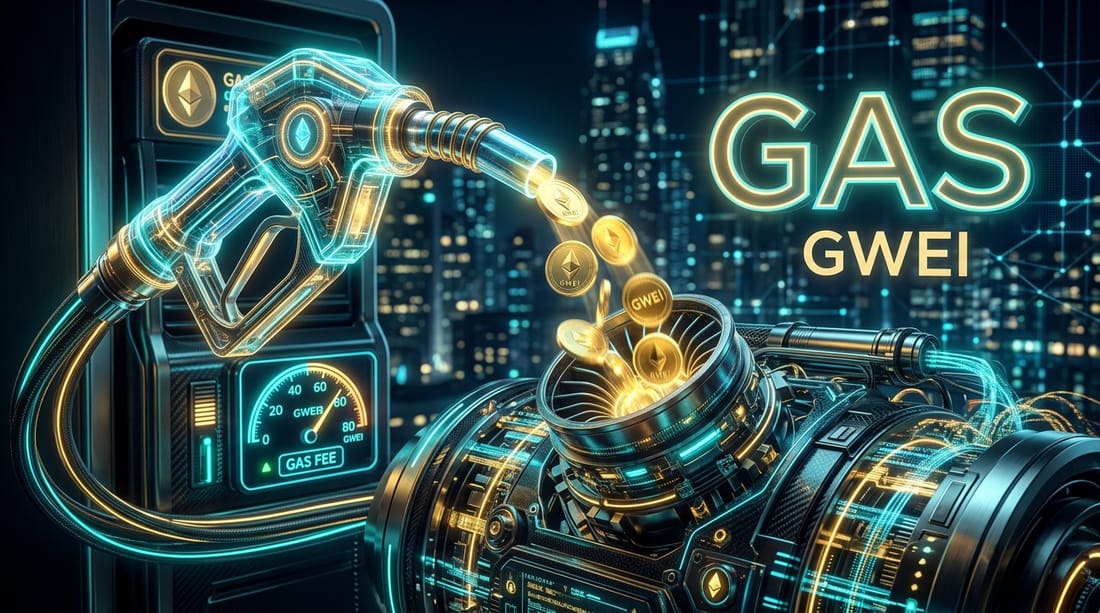
Every Ethereum user remembers their first gas shock: a $20 fee to move $50 of tokens. Gas fees are the most complained-about feature of crypto, but they exist for a reason — and once you understand the mechanics, you can routinely cut what you pay by 50–90%.
What gas actually pays for
A blockchain is one shared computer run by thousands of machines. Every transaction — a transfer, a swap, an NFT mint — consumes computation, and "gas" is the unit that measures how much. A simple ETH transfer costs 21,000 gas; a complex DeFi interaction can burn ten times that.
Your fee is gas used × price per unit of gas. The gas used is fixed by what you're doing. The price is an auction: when many people want into the next block, they bid the price up. That's why the same swap costs $1 on a quiet Sunday and $40 during a frenzied token launch — you're bidding for scarce block space against everyone else.
Since Ethereum's EIP-1559 upgrade, the fee has two parts: a base fee set automatically by the protocol (and burned — removed from supply), plus a small tip to the validator. Wallets handle this for you, but it's why fees now move smoothly with demand instead of spiking chaotically.
Practical ways to pay less
Time your transactions
Demand follows human activity. Weekends and late-night/early-morning UTC hours are consistently the cheapest; the overlap of US and European working hours is the most expensive. For anything that can wait — moving funds, claiming rewards, consolidating tokens — waiting for a quiet window is the single easiest saving.
Use Layer 2 networks
Layer 2s (Arbitrum, Optimism, Base and others) execute transactions off the main chain and post compressed proofs back to Ethereum, inheriting its security at a fraction of the cost. A swap that costs $15 on mainnet costs a few cents on a rollup. For everyday DeFi activity — swaps, staking, moving stablecoins — L2s aren't an optimization anymore — they're the default. Mainnet increasingly serves as the settlement layer for large transfers and the bridges themselves.
Batch and plan
Every separate transaction pays overhead. Claiming five small reward balances separately costs five base fees; doing it once a month costs one. The same goes for token approvals — and while you're at it, prefer setting exact approval amounts over "unlimited," which is also a security win.
Don't overpay the tip
Wallet defaults lean generous to make sure transactions confirm fast. If you're not in a hurry, most wallets let you select a "low" priority — your transaction might take a couple of minutes instead of fifteen seconds, and that's usually fine.
A transaction that runs out of gas fails — but still pays, because validators did the work. If a complex transaction looks borderline, it's cheaper to abandon it than to push it through with too little gas.
Why not just make gas free?
Chains that advertise near-zero fees pay for it somewhere: fewer validators, weaker decentralization, or fees that reappear once usage grows. Fees are also spam protection — without them, nothing stops someone from flooding the network with junk transactions. The realistic goal isn't free; it's cheap enough not to think about, which is exactly what Layer 2s deliver.
The takeaway
Gas is the price of a global shared computer with no operator. You can't avoid it, but you can stop overpaying: do everyday activity on Layer 2s, time non-urgent transactions for quiet hours, batch what you can, and let the slow lane work for you when speed doesn't matter.
Frequently asked questions
Space and computation on a shared global computer run by thousands of machines. Every transaction consumes computation, and "gas" measures how much — a simple transfer costs 21,000 gas, a complex DeFi interaction far more. Your fee is gas used × price per unit, and the price is set by an auction for scarce block space.
Because the price half of the equation is an auction. When lots of people want into the next block — a hot token launch, a market crash — they bid the price up, so the same swap can cost $1 on a quiet Sunday and $40 during a frenzy. Since the EIP-1559 upgrade fees move more smoothly with demand, but the auction dynamic remains.
Four practical levers: time transactions for low-demand hours (weekends and late-night/early-morning UTC are cheapest), use Layer 2 networks where the same action costs a fraction, batch and plan transactions instead of doing many small ones, and don't overpay the tip your wallet suggests. Together these routinely cut costs 50–90%.
Because the fee is what rations a genuinely scarce resource. If block space were free, the network would be instantly spammed into uselessness, and there'd be nothing paying the validators who secure it. Gas is the price that keeps a shared global computer from being overrun.
Keep reading




Popular this week
- 01Rug Pulls Hall of Shame: Famous Crypto Exit ScamsAnalysis · 4 min
- 02The Hidden Costs of Leverage: Funding, Fees, and SpreadsExplainer · 5 min
- 03Grid Trading Bots Explained, and When They Blow UpGuide · 4 min
- 04Where AI and Crypto Actually Meet: Compute, Data, and DePINAnalysis · 9 min
- 05How to Spot Wash Trading and Fake VolumeGuide · 5 min