When Countries Bet on Bitcoin: El Salvador and Beyond
One small country made Bitcoin legal tender and bought it by the truckload. Others quietly mine it with state power plants. What happens when a government treats crypto as a national strategy?
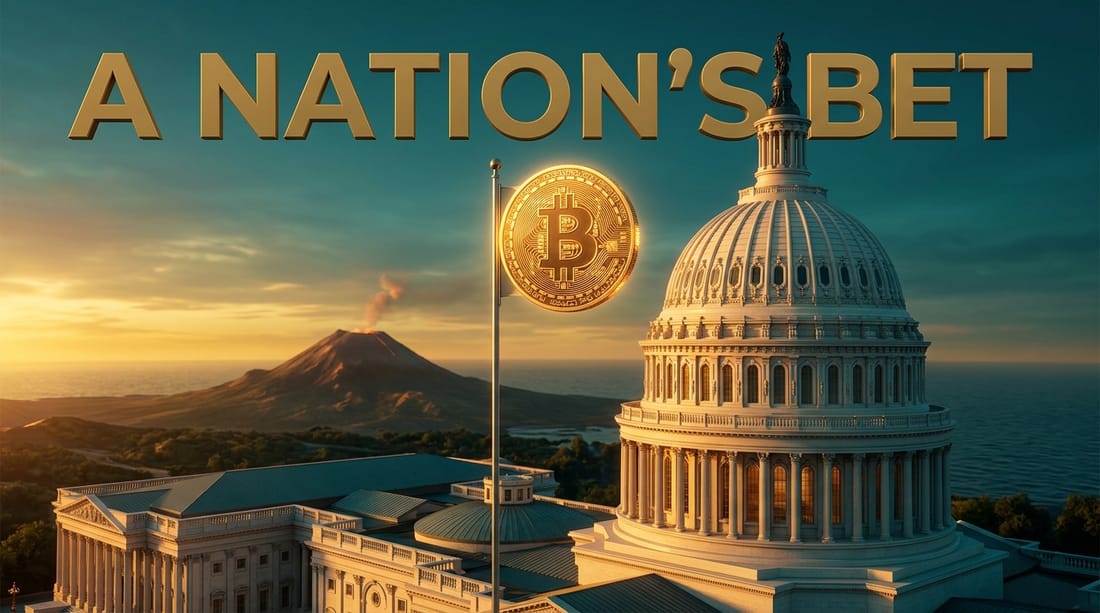
For most of its life, Bitcoin's relationship with governments was adversarial. Regulators warned about it, banks debanked it, and the entire ethos was money beyond state control. So it was genuinely startling when, in 2021, a sitting president stood up and announced that his country would not just tolerate Bitcoin — it would adopt it as official money and buy it for the national treasury.
The era of nation-states betting on Bitcoin had begun. It's a story full of bold gambles, awkward results, and a real question lurking underneath: what actually happens when a government treats crypto as national strategy?
El Salvador goes first
In September 2021, El Salvador, a small Central American nation that uses the US dollar, made Bitcoin legal tender — the first country ever to do so. President Nayib Bukele rolled out a national wallet app, installed Bitcoin ATMs, and began buying BTC for the state, often announcing purchases on social media with the swagger of a day trader.
The pitch was ambitious. Roughly 70% of Salvadorans were unbanked; Bitcoin and a smartphone could, in theory, leapfrog them straight into digital finance. Remittances — money sent home by Salvadorans abroad — are a huge share of the economy, and Bitcoin promised to cut the hefty fees charged by traditional services. It was a real attempt to solve real problems with crypto's actual strengths.
What actually happened
The results were, to put it diplomatically, mixed.
The good: The treasury's steady Bitcoin buying looked brilliant when prices climbed; at times the country sat on substantial paper gains, and Bukele's government leaned into a "Bitcoin nation" identity that drew tourism and crypto investment. The state kept buying through bear markets, a dollar-cost-averaging approach at national scale.
The awkward: Everyday adoption stayed stubbornly low. Most Salvadorans kept using dollars; surveys found the Bitcoin wallet was used little after the initial sign-up bonus wore off. The volatility that makes Bitcoin a thrilling investment makes it a clumsy currency for buying groceries. And international lenders like the IMF pressured the country over the risk, eventually nudging it to soften the "legal tender" mandate in exchange for financing.
The El Salvador experiment exposed a core tension: Bitcoin is excellent as a long-term reserve asset to hold, but its volatility makes it awkward as an everyday currency to spend. Those are two very different bets, and the country was making both at once.
The quieter players: mining with state power
El Salvador grabbed the headlines, but other countries have made subtler bets — turning national energy into Bitcoin.
Nations with cheap, abundant, or "stranded" energy realized they could mine Bitcoin and effectively convert kilowatt-hours into a globally liquid, hard-to-seize asset. El Salvador mines with geothermal energy from volcanoes. Bhutan quietly built a state hydro-powered mining operation that accumulated a surprisingly large Bitcoin stash. Other states have explored using flared natural gas — energy that would otherwise be wasted — to mine.
For a country shut out of, or wary of, the dollar-based banking system, this is geopolitically interesting: a way to earn an international reserve asset without anyone's permission, using resources you already have.
And the bans
Not every government is buying. The bet runs both ways, and plenty of nations have leaned hard against crypto — restricting or banning trading and mining over concerns about capital flight, energy use, fraud, and loss of monetary control. China's repeated crackdowns famously pushed a huge share of global mining overseas almost overnight. The regulatory map is a patchwork, and as we explore in coverage like Japan reclassifying crypto, the rules are still being actively rewritten everywhere.
Why these bets matter for everyone
You might wonder why a small country's crypto policy should matter to you. A few reasons:
- Legitimacy. Each sovereign adoption chips away at the "internet funny money" framing and pushes Bitcoin toward being treated as a serious reserve asset — part of the broader institutionalization of crypto.
- Sentiment. While one small nation rarely moves global prices, the direction of policy among large economies shifts the mood of the entire market. Talk of national Bitcoin reserves in major countries has repeatedly jolted prices.
- A live experiment. El Salvador and Bhutan are real-world tests of crypto's grandest claims. Their successes and stumbles teach the rest of the world what state-level Bitcoin actually does.
The age of governments betting on Bitcoin is just beginning, and it's gloriously unresolved. Some bets will look visionary in a decade; others will look reckless. But the fact that the question is now "how should a nation hold Bitcoin?" rather than "should Bitcoin exist?" is itself the headline. The outsider has been invited into the halls of power — and is still deciding how to behave there.
Frequently asked questions
El Salvador, in September 2021, became the first country to make Bitcoin legal tender alongside the US dollar. The Central African Republic briefly followed in 2022 before reversing course.
It's mixed and depends on timing. The country bought Bitcoin steadily and saw large paper gains when prices rose, but adoption among citizens stayed low, and it faced pressure from international lenders. Whether it 'worked' is still debated.
Some nations have cheap or stranded energy — like geothermal, hydro, or flared gas — and mining lets them turn that energy directly into a globally liquid asset. It can also be a way to earn hard currency outside the traditional banking system.
A single small nation rarely moves global prices much, but the symbolism matters. Major policy shifts — a large country adopting, banning, or building reserves — can shift sentiment significantly across the whole market.
Keep reading




Popular this week
- 01Rug Pulls Hall of Shame: Famous Crypto Exit ScamsAnalysis · 4 min
- 02The Hidden Costs of Leverage: Funding, Fees, and SpreadsExplainer · 5 min
- 03Grid Trading Bots Explained, and When They Blow UpGuide · 4 min
- 04Where AI and Crypto Actually Meet: Compute, Data, and DePINAnalysis · 9 min
- 05Modular vs Monolithic Blockchains: The Design FightExplainer · 6 min